In the high-stakes arena of professional tennis, few weapons are as decisive or as feared as a dominant serve. It’s the opening salvo, the point-starter, and often, the point-ender. A blistering ace or a perfectly placed kick serve can demoralize an opponent and dictate the flow of an entire match. But what separates a good serve from a legendary one? The answer lies at the intersection of raw physics and cold, hard statistics. By breaking down the biomechanics, ballistics, and data behind the game’s biggest serves, we can understand not just how they work, but why they are so devastatingly effective.
The Physics of Power: More Than Just Muscle
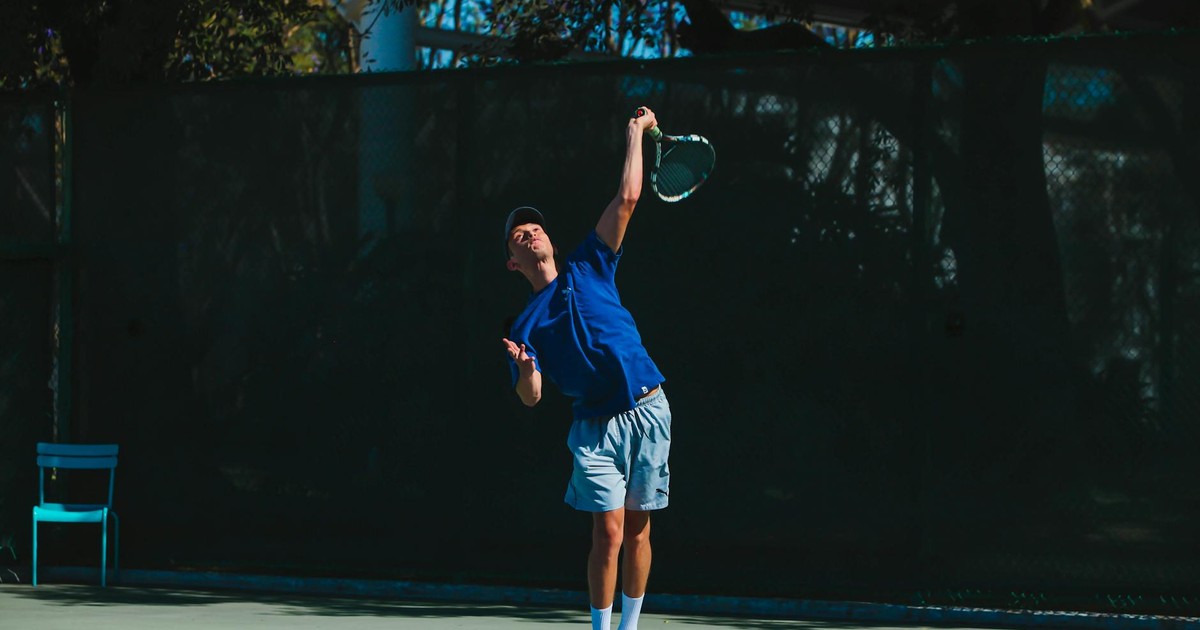
At its core, a powerful serve is a masterclass in kinetic energy transfer. It’s a kinetic chain, where energy generated from the ground up is efficiently transferred through the body and into the racquet head at the moment of impact. This isn’t just about strong shoulders; it’s about sequencing.
The Kinetic Chain in Action
The serve motion is a symphony of coordinated movements:
- Leg Drive & Coil: Power starts from the ground. A deep knee bend and explosive upward push from the legs generate the initial force. Simultaneously, the torso coils, storing elastic energy like a spring being wound.
- Uncoiling & Racquet Acceleration: The hips and shoulders begin to uncoil violently toward the target. This rotational force is the engine of the serve, catapulting the arm and racquet forward.
- Pronation: The Secret Sauce: Just before contact, the forearm rotates inward (pronates). This critical, last-millisecond action adds significant angular velocity to the racquet head, dramatically increasing ball speed. It’s the difference between throwing a baseball and throwing a slider.
- Contact Point: The ideal contact is at the absolute peak of the reach, where the body is fully extended. Striking the ball at this “power apex” maximizes the transfer of energy and allows for optimal clearance over the net.
Speed, Spin, and Trajectory
Pure speed is only one component. The interaction of speed, spin, and trajectory creates the serve’s ultimate behavior.
- Flat Serve: Minimal spin, maximum speed. The ball travels on a flatter, faster trajectory, but has a smaller margin for error over the net and into the service box.
- Kick/Topspin Serve: Heavy topspin and sidespin. The ball arcs high over the net and kicks up violently upon landing, pulling the receiver wide or forcing a high, defensive return. It’s a high-margin, high-reward serve, especially on second serves.
- Slice Serve: Predominantly sidespin. The ball curves in the air (often away from a right-hander’s deuce court) and skids low after the bounce, staying away from the opponent’s strike zone.
The most effective servers, like Novak Djokovic or Iga Świątek, masterfully blend these types, keeping opponents perpetually guessing.
The Statistics of Dominance: What the Numbers Reveal
While physics explains the “how,” analytics quantify the “how good.” Modern tracking technology (Hawk-Eye, IBM’s SlamTracker) provides a treasure trove of data that defines serving supremacy.
Key Serving Metrics
Analysts and coaches focus on several key performance indicators (KPIs):
- Ace Percentage: The percentage of serves that are outright aces. This is the purest measure of unreturnable power and placement.
- Service Points Won %: Perhaps the most telling stat. It measures how often a player wins the point directly from their serve, including aces, service winners, and weak returns that are easily put away.
- First Serve Percentage & Win Rate: A high first-serve percentage is good, but winning a high rate of those points is elite. The best servers maintain a high percentage and dominate when it lands in.
- Second Serve Win Rate: The true hallmark of a great server. Players like Rafael Nadal and Ashleigh Barty built their dominance on a devastatingly reliable and offensive second serve, eliminating the typical vulnerability.
- Average Serve Speed (1st & 2nd): While not everything, speed creates pressure and shortens reaction time.
- Return Points Won Against: An indirect metric. A dominant serve is proven by how few points opponents win when returning it.
Case Studies in Serving Excellence
Applying these physics and statistics to the tour’s best illustrates the different blueprints for serving dominance.

The Power Canon: John Isner & Reilly Opelka
The archetype of the power server. Their physics are simple: immense height (creating a drastic downward angle), massive leg drive, and a contact point that feels like it’s coming from the rafters.
- Statistics: Consistently lead the tour in aces, first-serve speed (often averaging over 130 mph), and service games held (regularly above 90%). Their second serves are often faster than most players’ first serves.
- Why it Works: The combination of speed and extreme angle gives opponents an impossibly small window to read, react, and make a meaningful return. Their matches are frequently decided by tiebreaks—a testament to the serve’s neutralizing power.
The Tactical Maestro: Novak Djokovic
Djokovic’s serve is a lesson in evolution and precision over pure horsepower. He transformed a once-vulnerable shot into a consistent, pinpoint weapon.
- Physics: Exceptional flexibility allows for a seamless kinetic chain and a deceptive, whip-like motion. His pinpoint accuracy stems from consistent ball toss and flawless biomechanical repetition.
- Statistics: He routinely tops the tour in service points won and holds a remarkably high second-serve win rate (often over 55%). He doesn’t lead in aces, but he leads in free points and never gives opponents a look at a weak second serve.
- Why it Works: It’s reliable under pressure and strategically varied. He uses slice out wide on the deuce court to open the alley, and heavy kicks to the backhand to set up his first-strike ground game.
The All-Court Hammer: Iga Świątek
On the WTA tour, Świątek has built a period of dominance anchored by a dramatically improved serve.
- Physics: She utilizes a powerful leg drive and full shoulder rotation, generating surprising power for her stature. Her kick serve is particularly effective, jumping high to opponents’ backhands.
- Statistics: During her most dominant streaks, she has led the tour in service games won and held a commanding first-serve win percentage. Her ability to hold serve easily provides a massive psychological and tactical cushion.
- Why it Works: It’s a foundation-setter. A strong, reliable first serve allows her to immediately seize control of the rally with her punishing forehand, turning service games into quick, energy-conserving affairs.
The Future of Serve Analytics
The next frontier in serve analysis is real-time biomechanical feedback and even more granular data. Wearable sensors can now measure the exact degrees of shoulder rotation, knee bend, and racquet head speed, allowing for hyper-personalized technical adjustments. Furthermore, predictive analytics are beginning to map serve patterns against specific returners, identifying which type of serve (wide slice, body jam, T-kick) is most likely to yield a weak return against a particular opponent’s stance or movement tendency.
This means the serve is evolving from a blunt instrument into a surgically precise, data-informed weapon. Tomorrow’s champions will be those who can combine generational power or precision with the intelligence to deploy it in the most statistically optimal way.
Conclusion: The Ultimate Advantage
The dominant tennis serve is a fusion of art and science, of instinctual athleticism and calculated execution. The physics—the kinetic chain, pronation, and spin generation—provide the blueprint for power and movement. The statistics—ace percentages, service points won, and second-serve dominance—provide the irrefutable proof of its effectiveness. From the raw power of Isner to the surgical precision of Djokovic and the foundational strength of Świątek, the common thread is that the serve is the one shot entirely under a player’s control. In a sport of relentless pressure and reaction, the ability to start a point with a decisive, data-backed advantage is, and will always be, the closest thing to a silver bullet in tennis.